
The Best Probiotics in the UK
Gut health is having a moment, and probiotics are the centre of it. The honest picture is mixed: some strains help some people with specific issues, and the field is still catching up with the hype. That said, they're widely used and generally well tolerated, and many people swear by them after antibiotics or during travel. Look at the strains and the billions-of-CFU count rather than just the brand shouting loudest.
Read our best Probiotics UK shortlist →
Short answer
For most people a gentle, well-reviewed daily probiotic is the right starting point, and it doesn't need to be expensive: good options start around £7. Pay more only for a specific reason. A researched single strain (such as Bifidobacterium longum 35624) is worth it for IBS-type symptoms; a high count with prebiotics suits people who tolerate probiotics well. A bigger CFU number on its own isn't a quality ranking.

#2 · NEW LEAF PRODUCTS NEW LEAF PRODUCTS Bio Cultures 80 Billion CFU: 20 Live Strains
★4.6 (432)
Check price 

#4 · Nu U Nutrition Nu U Nutrition Bio-Cultures Complex - 180 High Strength Capsules
★4.5 (9,600)
Check price 


#7 · Oxford Origins Oxford Origins Daily Pro Bio Cultures | One-a-Day Live Cultures
★4.5 (489)
Check price 
#8 · Biogut Biogut Restore Probiotic Supplement – Bloating & Digestive Comfort
★4.6 (55)
Check price 
#9 · Buyourtaste Buyourtaste Digestive Support Supplement for Gut Health, 120 Capsules
★4.9 (17)
Check price 


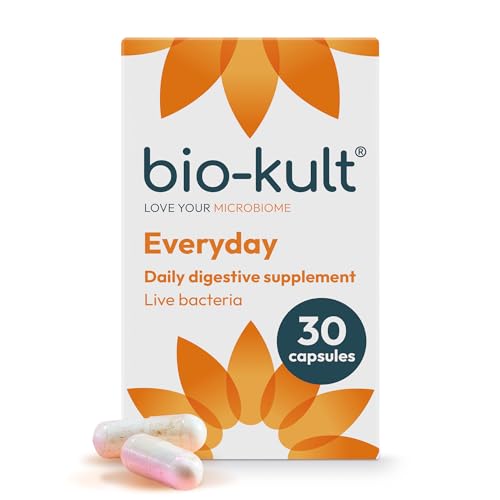


#15 · HRAMEX HRAMEX 120pcs Probiotics for Dogs,Dog Probiotics Supplements,Gut Flora Balance,Skin
★4.5 (1,200)
Check price 

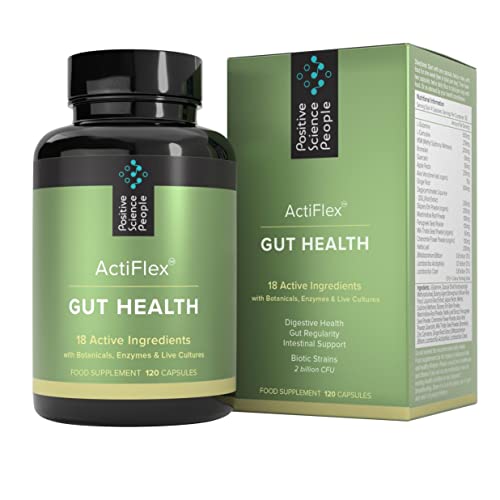
#18 · Positive Science People Positive Science People Gut Health - Digestive Enzymes, Probiotics, Prebiotics &
★4.1 (335)
Check price 
#19 · Wonderfulife Wonderfulife Probiotic Powder for Dogs, Dog Pre and Probiotic
★4.6 (45)
Check price 

#21 · Soul Nutrients Soul Nutrients Bio Culture Probiotics Complex - 40 Billion CFU
★4.5 (34)
Check price 
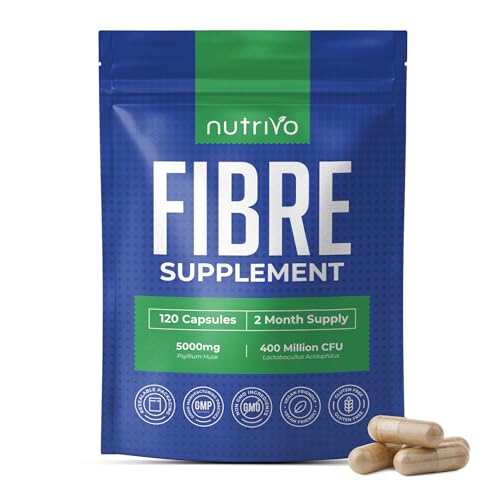
#22 · NaturesVits NaturesVits 4000mg Fibre Supplement Psyllium Husk Capsules with Probiotics
★4.3 (79)
Check price 
#23 · Inspiriko Inspiriko Organic Prebiotics for Gut Health - Award-Winning 10-in-1
★4.4 (1,900)
Check price 


#26 · Nutravita Nutravita Super Strength 40 Billion CFU Bio Cultures Complex
★4.5 (5,400)
Check price 






#35 · BODY JUICE OIL BODY JUICE OIL Probiotics for Dogs, Dog Probiotics for Gut Health
★4.4 (221)
Check price 
#36 · AerodyxM AerodyxM Probiotics for Dogs 180 Tablets, Dog Probiotic Tablets
★4.5 (98)
Check price 
#37 · Microbiome Labs Microbiome Labs MegaSporeBiotic Spores Only - Spore Based Probiotic Daily
★4.3 (46)
Check price 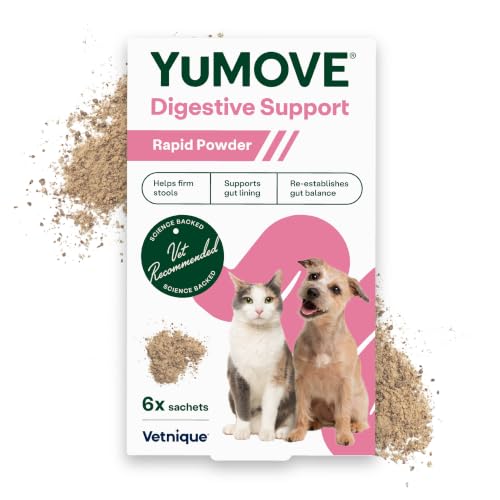

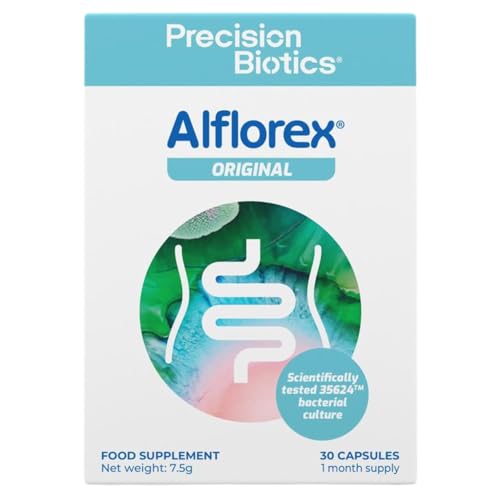
#40 · PrecisionBiotics PrecisionBiotics Alflorex Original - Daily Gut Health Supplement with
★4.5 (1,600)
Check price 


#47 · Symprove Symprove Liquid Live & Active Bacteria, Mango & Passionfruit
★4.4 (1,200)
Check price 
#48 · Symprove Symprove Liquid Live & Active Bacteria, Mango & Passionfruit
★4.4 (1,200)
Check price 
#49 · Symprove Symprove Liquid Live & Active Bacteria, Strawberry & Raspberry
★4.4 (259)
Check price 

#51 · VSL #3 VSL #3 VSL#3 High-Concentration Probiotic Supplement (10 sachets) for Gut
★4.6 (21)
Check price 


What the CFU number is worth
Every pack on this shelf leads with a CFU count, and they are not comparable until you divide by what you pay and how many capsules you get. The labels here run from 400 million to 450 billion CFU. Priced per 10 billion CFU, the shelf runs from 1.9p to £1.59, a 84 times difference. A bigger number is also easier to print than a better strain: of the 45 packs we can read, 2give a full strain identity with the strain number, the way B. longum 35624 is written. The rest name a genus and species at best, which is the level at which published research cannot be matched to what is in the capsule.
CFU counts, capsule counts and strain names are read from the listing wording. Cost columns use the price we track. A pack that does not print a figure gets a dash, not an estimate.
How we scored the probiotics on this page
We have assessed twelve probiotics individually and given each a BasketLab score out of 5, using the same four criteria every time: evidence, value, suitability and transparency. The scores are ours, not the Amazon rating, and they often differ sharply from it. Our method is published in full.
The spread below is the useful part. It shows that price and quality are only loosely related in this category, and that the most expensive product we assessed is also the one we can least justify.
| Product | Price | Our score | Best for |
|---|---|---|---|
| Alflorex (35624 strain) | ~£18/month | 4.4 | IBS-type symptoms, low FODMAP diets |
| Zipvit Bio Cultures | ~£7 | 4.3 | Cheapest sensible starting point |
| Nu U Bio-Cultures | ~£14 (6 months) | 4.3 | Long, low-cost daily maintenance |
| Hybrid Health 100bn | ~£10 (2 months) | 4.0 | High count at about 10p a day |
| New Leaf 80bn | ~£10 (2 months) | 3.9 | High count with both prebiotics |
| Biogut Restore | ~£12 | 3.8 | Bloating focus (thin review base) |
| Welzo Akkermansia | ~£22 | 3.4 | Trying Akkermansia affordably |
| MegaSporeBiotic | ~£60 | 3.1 | Spore-based, practitioner favourite |
| Theonia Complex | ~£80 | 2.3 | We couldn't justify the price |
CFU: why a bigger number isn't a better product
CFU means colony forming units, the count of live cultures per dose. It's the number every label shouts about, and it's the most misunderstood figure in the category.
Counts across the products above run from 6 billion to 100 billion, a seventeen-fold spread, yet the scores don't follow that spread at all. That's because what matters is whether enough live cultures reach the gut and whether those particular strains do anything useful. The most-researched product here (Alflorex) works on a comparatively modest count of one specific strain.
There's also a practical downside to jumping straight to a very high count: some people get temporary bloating or wind in the first week or two, especially when fermentable prebiotics such as inulin and FOS are included. Starting every other day usually settles it.
Strain versus blend: the real decision
This is the choice that actually matters, and it splits the category in two.
Single researched strain. One culture with published research behind it, at a modest count. Alflorex is the UK example, built on Bifidobacterium longum 35624 (formerly classified as B. infantis 35624), which is exclusive to PrecisionBiotics here. You are paying for the research, not the quantity. If you're managing IBS-type symptoms or following a low FODMAP diet, this is the sensible spend.
Multi-strain blend. Ten to twenty strains at a high count, usually with prebiotic fibre, at a much lower price. The logic is breadth: a varied microbiome may benefit from variety going in. There's less strain-specific research, but the cost per day can be pennies. For general daily support with no specific symptom, this is the pragmatic choice.
Neither approach is wrong. Match it to whether you've a defined problem or are simply topping up.
What prebiotics do, and when to avoid them
Prebiotic fibres such as inulin and FOS feed the live cultures so they can establish rather than passing straight through. Their inclusion is a genuine plus at any price, and many budget products skip it.
The exception matters though. Both are fermentable fibres, which is exactly why people following a low FODMAP diet often avoid them, and why they can aggravate bloating in sensitive guts. If that's you, a product without added prebiotic fibre (Alflorex is the obvious example) is the better fit even though it costs more.
Do you need to refrigerate probiotics?
Not usually, and it's worth checking before you buy. Every product we assessed above is shelf stable, which makes a daily habit far easier to keep and means you can travel without worrying. Some older-style probiotics still require refrigeration; there's nothing wrong with those, but they're simply less convenient.
Whatever you choose, consistency beats potency. Two to four weeks of daily use is the fair test, and a cheap product you actually take every day will do more for you than a premium one that stays in the cupboard.
Probiotics for dogs are a different product
We also assess canine probiotics, and they aren't interchangeable with human ones: doses, strains and formats differ, and palatability matters far more. Protexin Pro-Fibre (BL 4.5) is the best-evidenced daily option we've looked at, with more than 8,700 reviews, while Pro-Kolin Advanced (BL 4.1) is the short-term paste for an acute upset rather than daily maintenance.
Browse those in our dog essentials section rather than giving a human supplement to a pet.
Common questions
What is the best probiotic in the UK?
It depends on the job. For IBS-type symptoms or a low FODMAP diet, the researched single strain in Alflorex (our score 4.4) is the sensible spend at around £18 a month. For general daily support, Zipvit Bio Cultures at around £7 (4.3) or Nu U at around £14 for six months (4.3) do the job for a fraction of that.
Does a higher CFU mean a better probiotic?
No. CFU counts across the products we assessed range from 6 billion to 100 billion, and our scores don't follow that spread. What matters is whether enough live cultures survive to the gut and whether those specific strains do anything useful. Very high counts can also cause temporary bloating at first.
How much should I pay for a probiotic?
Good options start at around £7, and the products we scored highest cost between £7 and £18. Paying more is justified by a researched strain or a specific formulation need, not by a bigger number on the label. The most expensive product we assessed, at around £80, scored lowest on value.
How long do probiotics take to work?
Allow two to four weeks of consistent daily use before judging. Effects build gradually and vary between people, so taking it every day matters far more than the CFU count on the box.
Should I take probiotics with prebiotics?
Usually yes: prebiotic fibres such as inulin and FOS feed the cultures so they establish rather than passing through. The exception is a sensitive gut or a low FODMAP diet, where those fermentable fibres can aggravate bloating; then a prebiotic-free single strain suits better.
Do probiotics need to be refrigerated?
Most modern ones don't, including every product we assessed here. Shelf-stable capsules are easier to take consistently and to travel with, which matters because consistency is what makes a probiotic work.
When should I see a GP instead?
Probiotics are food supplements, not treatments. See your GP if you've persistent changes in bowel habit, blood in your stools, unexplained weight loss, severe or ongoing pain, or symptoms that keep coming back despite dietary changes.