
#1 · NEW LEAF PRODUCTS NEW LEAF PRODUCTS Biotin Hair Growth Vitamins 12,000mcg D-Biotin Tablets Enriched
★4.5 (3,600)
Check price Hair and nail supplements are a large, confident category built on a small piece of biology. This page sets out what biotin actually does, when supplementing genuinely helps, and one safety point that's under-reported.
Read our best Hair, Skin & Nail Supplements UK shortlist →
Biotin (vitamin B7) contributes to the maintenance of normal hair and skin, which is the only claim UK labels are allowed to make. Supplementing reliably helps only if you're actually deficient, and deficiency is rare on a normal diet. The doses sold, often 10,000mcg, are hundreds of times the reference intake. The point most people are never told: high-dose biotin interferes with common blood tests, including thyroid and heart tests, so tell your doctor you take it.

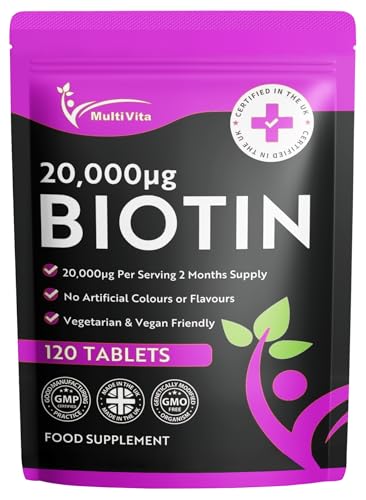
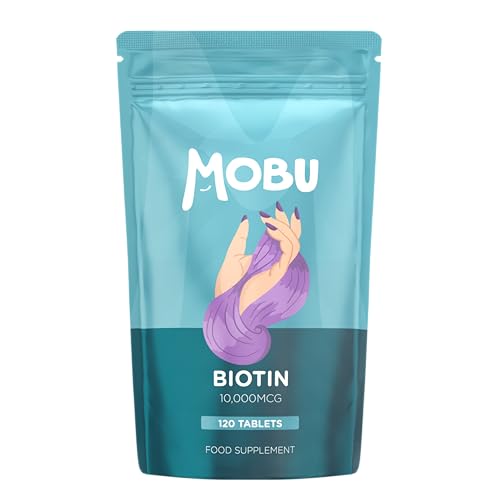

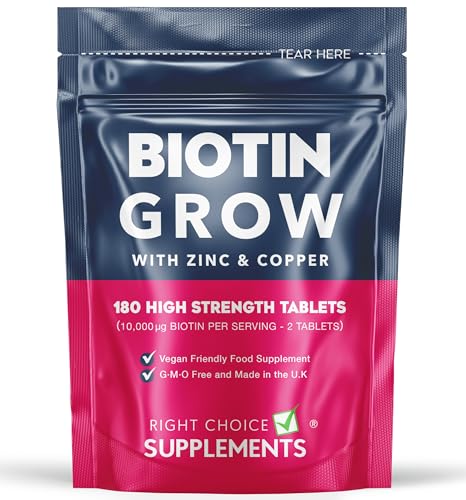


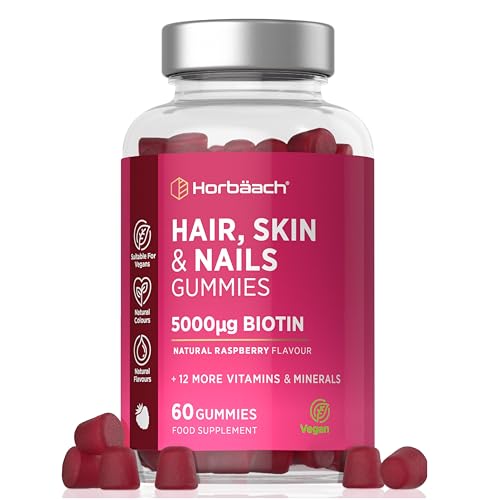


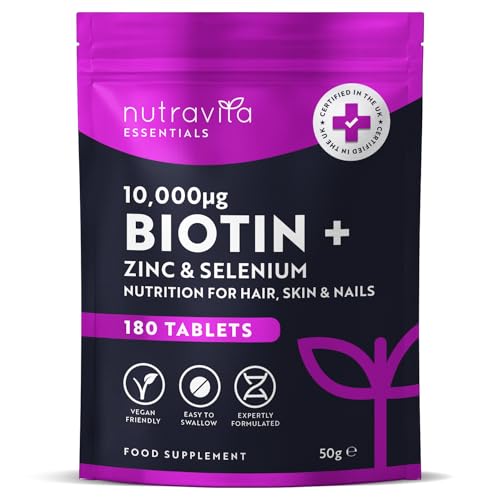
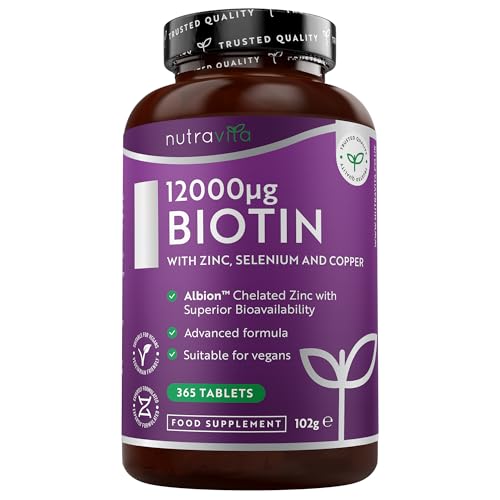


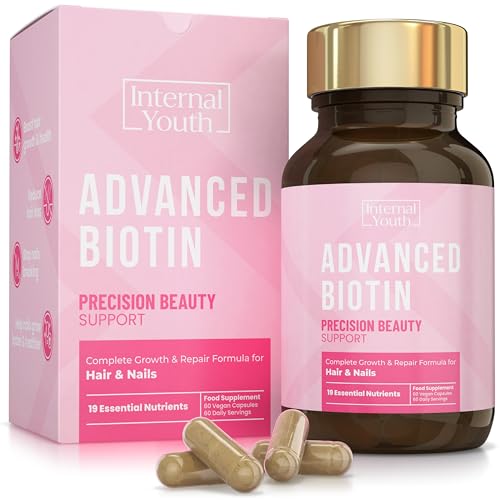


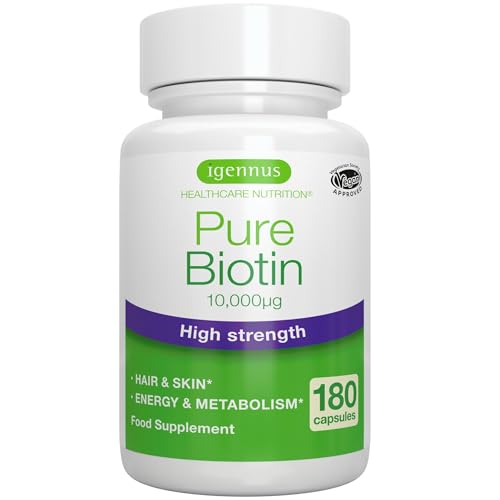

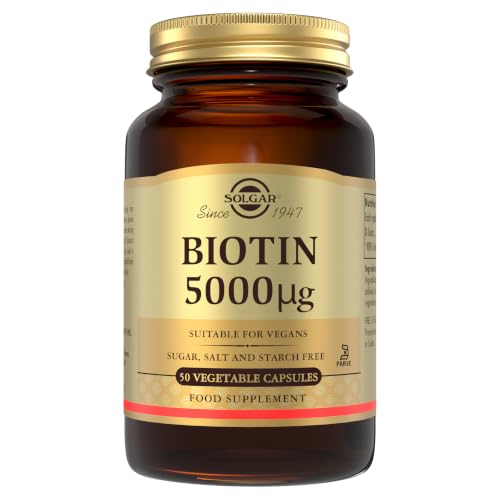


Biotin packs compete on the size of the number. The reference intake printed on labels, the one the percentage figures on the back are calculated against, is 50 mcg. The median strength on this shelf is 10,000 mcg, and every one of the 35 packs we can read is at least a hundred times the reference, up to 20,000 mcg. That is the arithmetic; what it is worth is a separate question and one the packs do not answer.
Strengths are read from the listing wording. Where a pack states its figure per serving rather than per tablet the table says so, because a serving is sometimes two tablets.
Biotin is vitamin B7, a water-soluble B vitamin involved in energy metabolism and in the maintenance of hair, skin and mucous membranes. Those maintenance claims are authorised on UK labels, and they're real.
What the evidence doesn't support is that extra biotin makes hair grow faster or thicker in someone who has enough already. The studies showing dramatic improvement are in people with a genuine deficiency or a specific medical condition, and correcting a deficiency isn't the same as boosting a normal level. Biotin deficiency is uncommon, because it's present in eggs, nuts, liver and wholegrains and is also made by gut bacteria.
That's worth being blunt about, because this category sells a lot of product on an implied promise it can't keep. If your hair is thinning, the useful question is why.
The dose is where biotin products differ from almost anything else in the aisle. The nutrient reference value used on UK labels is 50 micrograms a day. Across the 48 biotin products we track, the 40 with a readable dose run from 5,000 to 20,000 micrograms, and the median is 10,000 micrograms, which is two hundred times the reference value. Thirty-six of the 40 are at 10,000 or above.
Biotin is water soluble and there is no established upper limit, which is why brands can print these numbers without breaching anything. But a number that large is a marketing decision rather than a nutritional one: genuine biotin deficiency is rare in people eating a normal diet, and where hair thinning has a cause, that cause is usually not biotin.
The dose does have one real consequence, and it is the reason we put it high on this page rather than in a footnote. High-dose biotin interferes with common blood tests, including thyroid function and the troponin test used to assess chest pain, and it can push results in a direction that looks like a real problem. The advice is to stop taking it several days before a blood test and to tell whoever is taking the sample. That is covered in full below.
This is the single most important practical fact in the category and it rarely appears on packaging. High-dose biotin interferes with many laboratory immunoassays, which can produce falsely high or falsely low results depending on the test. The affected tests include thyroid function and troponin, the marker used to diagnose a heart attack.
That's not theoretical: regulators including the MHRA and the FDA have issued warnings about it, and there have been cases of misdiagnosis. A 10,000mcg supplement is roughly 200 times the reference intake, which is easily enough to affect results.
Tell any doctor or nurse taking your blood that you take biotin, and expect to be asked to stop it for a few days before a test. This is a good reason to prefer a modest dose unless you've a reason for a high one.
Thinning hair has causes that a vitamin won't touch, and several of them are worth ruling out. Iron deficiency is a common cause in women and is easily tested. Thyroid problems cause hair changes in both directions. Postpartum shedding is normal and resolves on its own over months. Male and female pattern hair loss is genetic and has specific licensed treatments. Stress, crash dieting and recent illness all cause a temporary shed that recovers.
So the sensible order is: if hair loss is sudden, patchy, or comes with other symptoms such as fatigue, weight change or feeling cold, see a GP and ask about iron and thyroid testing before buying supplements. A blood test costs nothing on the NHS and answers a question a supplement can't.
If everything checks out and you simply want to support what you've, that's a perfectly reasonable basis for taking one. It's just a different proposition from fixing a problem.
Most products in this category aren't just biotin. The additions worth having are ones with authorised claims of their own: zinc and selenium both contribute to the maintenance of normal hair and nails, and zinc is one of the more common genuine shortfalls. Vitamin C supports normal collagen formation, and iron matters, though iron shouldn't be taken without knowing your levels.
Things that are mostly there for the label: very long botanical lists at token doses, and collagen at amounts far below what collagen studies use.
On dose: 10,000mcg and 12,000mcg biotin are common and are far above any requirement. Because biotin is water-soluble the excess is largely excreted, so the main practical consequences are cost and the blood test issue rather than toxicity. A lower-dose product is often the more sensible buy.
Format is a real consideration for something taken daily for months. Gummies are easy to take and cost several times more per day than tablets, and they contain sugar. Our collagen and zinc pages cover those ingredients separately.
Reliably only if you're deficient, and deficiency is uncommon on a normal diet. Studies showing dramatic improvement are in people with a genuine deficiency or a specific medical condition. UK labels may say biotin contributes to the maintenance of normal hair, which is a different claim from growth.
Yes, and this is important. High-dose biotin interferes with many laboratory immunoassays, including thyroid function and troponin, the marker used to diagnose a heart attack. Tell any doctor or nurse taking your blood that you take it, and expect to be asked to stop for a few days beforehand.
It's roughly 200 times the reference intake. Biotin is water-soluble so excess is largely excreted, and toxicity isn't the main concern. The practical downsides are cost and blood test interference, which is why a lower dose is often the more sensible choice.
Find the cause first. Iron deficiency and thyroid problems are common, testable causes that supplements won't fix. If hair loss is sudden, patchy, or comes with fatigue, weight change or feeling cold, see a GP and ask about iron and thyroid tests before buying anything.
Zinc and selenium both have authorised claims for maintaining normal hair and nails, and vitamin C supports collagen formation. Long botanical lists at token doses and collagen at very low amounts are mostly there for the label.
They are easier to take and cost several times more per day, and they contain sugar. If a tablet works for you, it's the better value. If a gummy is the only format you'll take daily for months, that consistency is worth more than the saving.
Hair grows roughly a centimetre a month, so any genuine change takes months rather than weeks to become visible. If nothing has changed after three to six months of consistent use, the cause is probably not something a supplement addresses.