Overview
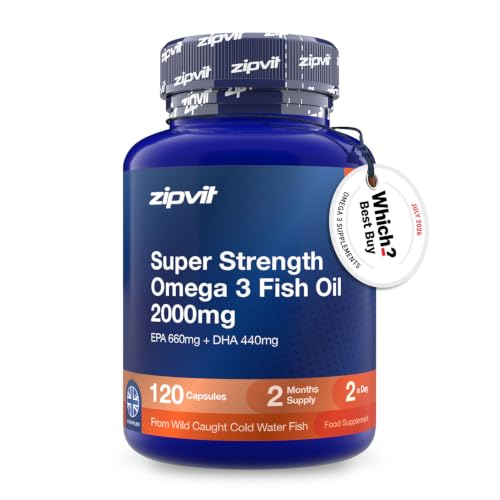
This is one of the most-reviewed supplements in our entire catalogue: close to 30,000 ratings at 4.7, which is an exceptionally large and stable evidence base. The formula is straightforward and honest about its numbers: 2000mg of fish oil delivering 660mg EPA and 440mg DHA per daily dose, sustainably certified, at around £21. Here is why the EPA and DHA figures matter more than the headline milligrams.
At a glance - Dose
- 2000mg fish oil per daily serving
- Actives
- 660mg EPA + 440mg DHA
- Certification
- Friend of the Sea (sustainable sourcing)
- Best for
- Heart, brain and vision support at a sensible dose
- Rating
- 4.7 / 5 from ~29,700 reviews
- Typical price
- Around £21 (check live price below)
Read the EPA and DHA, not the headline number
This is the single most useful thing to know when buying fish oil. Products shout about 1000mg or 2000mg, but that is the weight of the oil, not the omega-3 in it. The numbers that count are <strong>EPA and DHA</strong>, the two active fatty acids, and they are often a small fraction of the headline.
Nutravita states 660mg EPA and 440mg DHA per daily dose, which is 1,100mg of combined actives from 2000mg of oil. That is a genuinely high concentration; plenty of cheaper products deliver a third of that from the same headline milligrams, so comparing on price alone is misleading.
What EPA and DHA are recognised for
European food-safety approved claims are specific and modest: EPA and DHA contribute to the normal function of the heart, and DHA contributes to the maintenance of normal brain function and normal vision. Those are the honest boundaries, and they apply at defined daily intakes rather than any amount.
The NHS position is that oily fish is the best source and that most people should aim for a portion or two a week. A supplement is a sensible fallback if you rarely eat oily fish, not a replacement for a reasonable diet.
Sourcing, aftertaste and practicality
The oil is Friend of the Sea certified, which addresses the sustainability question that hangs over fish oil generally. The softgels are formulated to avoid the fishy repeat that puts many people off, and reviewers consistently back that up: aftertaste complaints are notably rare for a product with nearly 30,000 ratings.
If you do get repeat, taking the capsules with food or keeping them in the fridge usually solves it, though refrigeration is not required.
Is it worth it? Our verdict
Yes, and it is one of the more clear-cut recommendations we have made. The evidence base is enormous and consistent, the active EPA and DHA content is high and clearly stated, sourcing is certified, and the price per day is reasonable for that concentration.
Skip it if you already eat oily fish a couple of times a week, since you are likely getting what you need. If you take blood thinners, are pregnant, or have a fish allergy, check with your GP or pharmacist first.
Key features, as the manufacturer lists them
Taken from the product listing via Amazon's product API. These are the seller's claims, not our test results.
- 2000mg Fish Oil per Daily Serving: two softgels give you 2000mg fish oil, of which 1100mg is omega 3: 660mg EPA and 440mg DHA. Stated per daily serving, not per capsule, so you can compare like for like.
- Heart, Brain and Vision: at this serving, three authorised claims apply. EPA and DHA contribute to the normal function of the heart. DHA contributes to the maintenance of normal brain function. DHA contributes to the maintenance of normal vision.
- Easy Daily Use, 4 Month Supply: take 2 softgels daily with water. These easy-to-swallow softgels are formulated to minimise fishy aftertaste, and 240 softgels is a 4 month supply, so you are not reordering every few weeks.
- UK-Made, GMP-Certified and Batch Tested: this omega 3 fish oil is manufactured in the UK in GMP-certified facilities and molecularly distilled for purity. Every batch is independently tested for heavy metals and microbiological safety.
- Fish Oil from Small Fish: the oil comes from small fish including anchovies and sardines from the Peruvian coast, certified by Friend of the Sea. This is a fish oil product and the softgel shell contains bovine gelatine, so it is not suitable for vegetarians or vegans. Formulated for adults over 18.
Frequently asked questions
How much EPA and DHA should omega 3 have?
Look at the EPA and DHA figures rather than the headline fish-oil milligrams, since the actives are often a fraction of it. Nutravita provides 660mg EPA and 440mg DHA per daily dose from 2000mg of oil, which is a high concentration compared with many cheaper products.
Is Nutravita omega 3 good quality?
It has one of the largest evidence bases in the category, roughly 29,700 ratings at 4.7, states its EPA and DHA clearly, and is Friend of the Sea certified for sustainable sourcing. Those three things together make it a straightforward choice.
Does it cause a fishy aftertaste?
Aftertaste complaints are rare for a product with this many reviews, as the softgels are formulated to avoid repeat. If you do notice it, taking the capsules with a meal or storing them in the fridge usually resolves it.
Do I need an omega 3 supplement?
NHS guidance is that oily fish is the best source and most people should aim for one to two portions a week. A supplement is a sensible fallback if you rarely eat oily fish, and less necessary if you already do.
Who should not take fish oil?
Check with your GP or pharmacist if you take blood-thinning medication, are pregnant or breastfeeding, are due surgery, or have a fish or shellfish allergy. It is a food supplement rather than a medicine, but these interactions are worth confirming.
Check price on Amazon →