Nappy Finder
By the BasketLab team · updated 25 September 2026 · how we rank
The nappy aisle mixes nine different products under one label. Tell us your baby's weight or pick a stage, and this page shows only what applies, with a live cost per nappy so you can compare a monthly box against a small pack honestly.
Nappy sizes go by weight, not age. Size 1 is 2 to 5kg, size 2 is 4 to 8kg, size 3 is 6 to 10kg, size 4 is 9 to 14kg, size 5 is 11 to 16kg, size 6 is 13 to 19kg. Move up when you get leaks or red marks, not on a birthday. Switch to pull-up pants once your baby is standing and wriggling, and use a swim nappy for pools because ordinary nappies swell in water.
Filtering is optional. Every section below stays on the page, so nothing is hidden from you or from search engines.
Newborn
Newborns get through the most nappies of any stage, often 10 to 12 a day in the first month. Buy one pack rather than a monthly box until you know your baby's weight is settling, because the first size is outgrown fast.
-
 Price →
 -
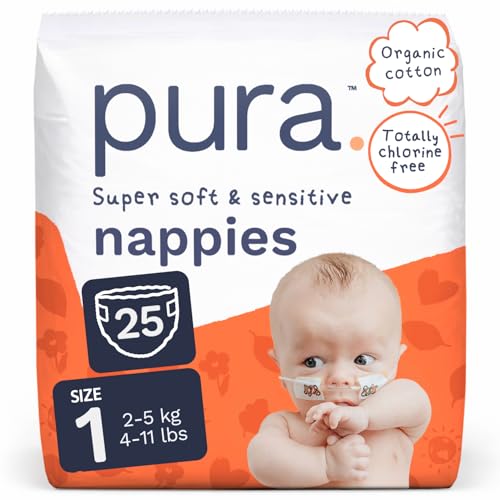 Pura Newborn Baby Nappies Size 1, 25 Count, 2-5kg/4-11lbs Small pack, good for trying a brand ★ 4.1 on AmazonPrice →
Baby
This is the longest stretch in most nappy sizes and where monthly boxes start to pay off. Around 8 to 10 nappies a day at the start, easing to 6 to 8.
-
 Naty BioEmbrace Baby Nappies Size 4 (7-18kg), 88 Count Size 4 (7-18kg), hypoallergenic, overlaps this stage upward ★ 3.6 on AmazonPrice →
Crawling and toddler
Movement is the deciding factor here. Once a baby crawls and stands, taped nappies get harder to fasten and many parents switch to pull-up style pants even before potty training.
-
 Pampers Baby-Dry Paw Patrol Edition Size 5, 186 Nappies Size 5 (11-16kg) monthly box ★ 4.5 on AmazonPrice →
 -
 Price →
 -
 Pampers Baby-Dry Characters Paw Patrol Nappy Pants S6 Size 6 pants, character design ★ 4.7 on AmazonPrice →
Potty training
Pants pull up and tear down at the side, which is what makes them work for a child learning to use a potty. Expect to buy these alongside, not instead of, nappies for a while.
-
 Pampers Premium Protection Nappy Pants Size 6, 132 Nappies Size 6 pants (13-19kg), monthly pack ★ 4.7 on AmazonPrice →
 -
 by Amazon Disney Nappy Pants, Size 6 (15+ kg), 60 Size 6 pants (15+kg), own-brand value ★ 4.1 on AmazonPrice →
 -
 Naty FreeMovers Nappy Pants, Size 6,(16+kg), | For Sensitive Size 6 (16+kg), for sensitive skin ★ 4.4 on AmazonPrice →
 -
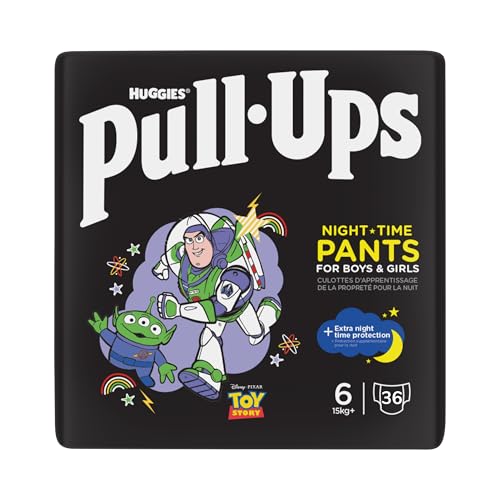 HUGGIES Pull-Ups, Trainers Night Nappy Pants for 2-4 Years Size 6-7 night pants, 2-4 years ★ 4.6 on AmazonPrice →
 -
 Pura Nappy Pants Size 8, 15 Count, 19kg+, 360° Size 8 (19kg+), the largest standard pant ★ 3.8 on AmazonPrice →
Night-time and bedwetting
Bedwetting pants are a separate category sized by age and weight, designed to look and feel like underwear. Night dryness commonly lags daytime dryness by years, and that is normal rather than a problem to fix.
-
 HUGGIES DryNites Pyjama Pants, Girl's 4-7 Years (17-30KG), 30 Girls 4-7 years (17-30kg) ★ 4.6 on AmazonPrice →
 -
 Ninjamas Pampers Ninjamas Pyjama Pants Unisex Spaceships, 4-7 Years Unisex 4-7 years (17-30kg) ★ 4.5 on AmazonPrice →
 -
 Ninjamas Pampers Ninjamas Pyjama Pants Unisex Spaceships, 8-12 Years Unisex 8-12 years (27-43kg) ★ 4.4 on AmazonPrice →
 -
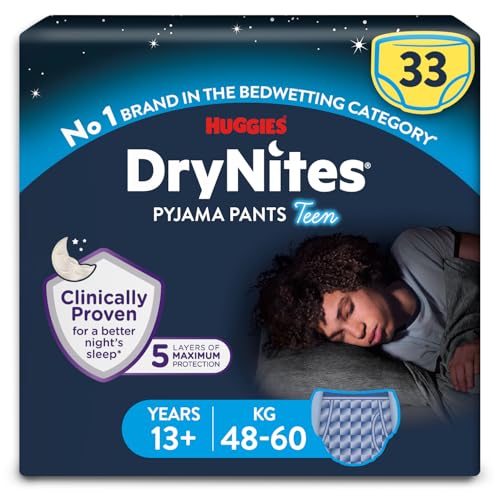 HUGGIES DryNites, Pyjama Pants, Boys 13+ Years (48-60KG), 33 Boys 13+ years (48-60kg) ★ 4.5 on AmazonPrice →
Swimming
Swim nappies do not swell in water, which ordinary nappies do. Most UK pools require one for any child not reliably dry, and many require a reusable one over a disposable.
-
 Price →
 -
 Bambo Nature Premium Swim Nappy Pants Medium Size (12+ kg) Disposable, medium (12+kg), eco-labelled ★ 4.5 on AmazonPrice →
 -
 Splash About Baby Kids New Improved Happy Nappy Reusable, meets most pool requirements ★ 4.6 on AmazonPrice →
Wipes
Buy in bulk. Per-wipe cost varies by a factor of five between a single travel pack and a bulk box of the same brand, and wipes do not go off within a normal buying cycle.
-
 WaterWipes Sensitive+ Newborn & Baby Wipes, 720 Count Water-based, for newborn and sensitive skin ★ 4.8 on AmazonPrice →
 -
 Price →
 -
 Price →
 -
 Price →
 -
 by Amazon Ultra Sensitive Baby Wipes, 99% Water, 1080 Wipes Own-brand ultra sensitive ★ 3.9 on AmazonPrice →
 -
 Price →
 -
 Price →
 -
 WaterWipes Sensitive+ Baby & Toddler Wipes, 180 Count Small pack for the changing bag ★ 4.8 on AmazonPrice →
Nappy cream
There are two kinds: a barrier ointment used at every change to prevent soreness, and a treatment cream for skin that is already irritated. Persistent or spreading rash needs a pharmacist or GP, not a bigger tube.
-
 Bepanthen Nappy Care Ointment | Nappy Cream with Provitamin Barrier ointment, suitable from newborn ★ 4.8 on AmazonPrice →
 -
 Metanium Everyday Barrier Ointment, Protection From Irritants, For Everyday Everyday barrier ointment ★ 4.7 on AmazonPrice →
 -
 Price →
 -
 Price →
Disposal
Bags are cheap and flexible. A sealed bin is more convenient for a nursery but locks you into buying that brand's cassettes for years, which is where the real cost sits.
-
 Price →
 -
 Price →
 -
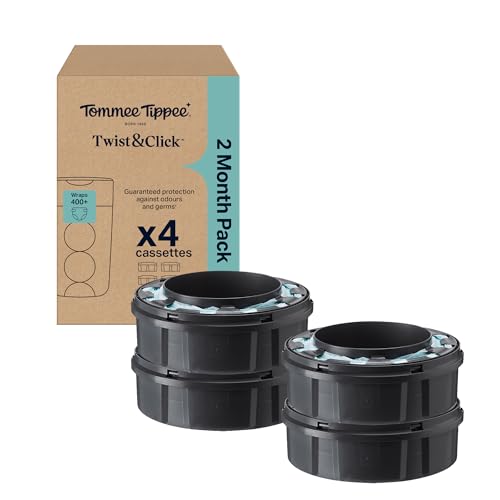 Tommee Tippee Twist & Click Nappy Bin Refill Cassettes Pack Bin refill cassettes, 4 pack ★ 4.6 on AmazonPrice →
UK nappy size chart by weight
Sizes overlap and vary a little between brands, so treat this as a starting point rather than a rule. If your baby sits on a boundary, the smaller size usually fits better until you start getting leaks.
| Size | Weight | Roughly |
|---|---|---|
| Size 0 / micro | Under 2.5kg | Premature and very small newborns |
| Size 1 | 2 to 5kg | Newborn, first weeks |
| Size 2 | 4 to 8kg | Roughly 1 to 4 months |
| Size 3 | 6 to 10kg | Roughly 3 to 9 months |
| Size 4 | 9 to 14kg | Crawling and early walking |
| Size 5 | 11 to 16kg | Toddler |
| Size 6 | 13 to 19kg | Older toddler, often in pants |
| Size 7 | 16 to 24kg | Potty training |
| Size 8 | 19kg and up | Largest standard pant |
The three things that actually decide the size
Weight gets you to roughly the right box, and then fit decides. Leaks are the clearest signal: a nappy that leaks overnight when it did not last week is usually too small rather than faulty. Red marks around the thighs or waist after a change mean it is tight. And where the tabs land tells you a lot: on a good fit they fasten out towards the sides, and when they start meeting in the middle you have run out of nappy.
Going up a size when in doubt is not free, because a nappy that is too big leaks around the legs. If you are between sizes and not leaking, stay put. Our nappy size guide by weight covers the brand-by-brand differences, and how many nappies a day gives you a weekly shopping estimate.
Cost per nappy is the only fair comparison
A £38 monthly box and a £5 small pack are not comparable on shelf price, and that is exactly what supermarket shelves invite you to do. Where we know how many are in the pack, the finder above works out the price per nappy from the live Amazon price, so the number you see is current rather than something we typed in months ago.
Two patterns hold up almost everywhere. Monthly boxes beat small packs per nappy, usually by a wide margin, and own-brand beats premium brands by a third or more. The one exception is the newborn stage: babies leave size 1 quickly, so buy small until the size settles and switch to boxes after that. If you are weighing up disposables against cloth, our reusable vs disposable nappies guide runs the full-cost maths including washing.
Common questions
What nappy size does my baby need?
Nappy sizes go by weight, not age. As a rough UK guide: size 1 is 2 to 5kg, size 2 is 4 to 8kg, size 3 is 6 to 10kg, size 4 is 9 to 14kg, size 5 is 11 to 16kg and size 6 is 13 to 19kg. Ranges overlap and differ between brands, so if your baby sits on a boundary, the lower size is usually the better fit until leaks start.
How do I know when to move up a nappy size?
The signals are leaks at night, red marks around the legs or waist, the tabs meeting in the middle rather than at the sides, and running out of room on the fastening. Weight alone is not the trigger; fit is.
How many nappies a day will I use?
Around 10 to 12 a day for a newborn, 8 to 10 from one to five months, 6 to 8 from six months, and 4 to 6 for a toddler. Our guide on how many nappies a day sets out a weekly shopping estimate.
When should I switch from nappies to pants?
Many parents switch once a baby is standing and wriggling, because taped nappies get hard to fasten on a moving child. Pants are also what you want for potty training, since they tear down at the side.
Are bedwetting pants the same as nappies?
No. They are sized by age and weight rather than nappy size, and they are designed to look and feel like underwear. Night dryness commonly lags daytime dryness by years, which is normal.
Do I need special swim nappies?
Yes. Ordinary nappies swell in water and fall apart. Most UK pools require a swim nappy for any child not reliably dry, and many require a reusable one worn over a disposable, so check your pool before buying.
Is own-brand nappy cheaper per nappy?
Usually yes, often by a third or more. The finder above shows a live cost per nappy for packs where we know the count, so you can compare a monthly box against a small pack directly rather than by shelf price.
Are monthly boxes always better value?
Per nappy, usually. The exception is the newborn stage, where babies outgrow size 1 quickly and a large box can be left over. Buy small at the start, then switch to boxes once the size is stable.